
Fujian CDMO Platform of the National Engineering Center for the Cell Industry Launches, Opening a Clinical Research and Translation Pathway for New Biomedical Technologies
October 20, 2026Indonesian Stem-Cell Delegation Visits the National Engineering Center for the Cell Industry to Explore New Belt and Road Biomedical Cooperation
October 20, 2026Under Lecheng’s New Rules, How Can Cell Projects Localise On Time and Stay Compliant? CellAuto Offers a Practical Solution
Boao Lecheng has recently opened public consultation on its “Detailed Rules for the Suspension and Exit of the Translational Application of New Biomedical Technologies (Draft for Comment)”. The core signal is clear: a project is not “done” the moment it receives approval — it must genuinely carry out localised preparation in Lecheng, run its data, and stay continuously compliant.

For companies and hospitals carrying out, or planning, cell-therapy clinical translation in Lecheng, the new rules turn three things into hard obligations: starting localised preparation on time, keeping whole-process quality control traceable, and reporting data continuously as required.
I. What the new rules actually target
According to the draft, medical institutions already approved for translational application by the Lecheng Medical Products Administration must above all avoid the following risks:
“Approved but not built”: a project that has not started localised preparation within six months of approval, and has not submitted a confirmed reasonable explanation and plan, may be ordered to suspend; if it still fails to start six months after a formal interview, it can be forced to exit.
“Approved but not used”: failing to carry out translational application within six months, and still not doing so six months after an interview, likewise leads to forced exit.
Broken QC chain: missing or falsified cell traceability, preparation or testing records must trigger a self-initiated suspension and report within 24 hours.
Data not reported: failing to report adverse events, annual application, medical-record follow-up or preparation data as required can bring a 15–90 day rectification notice.
Non-compliant environment: a substandard preparation environment, sample management, cold chain or waste disposal can bring a time-limited suspension.
In a sentence: Lecheng wants physical operation — “approval, a production line, data and traceability” — not just a nameplate, outsourcing or a concept.
II. CellAuto: making localised preparation on-time, compliant and reproducible
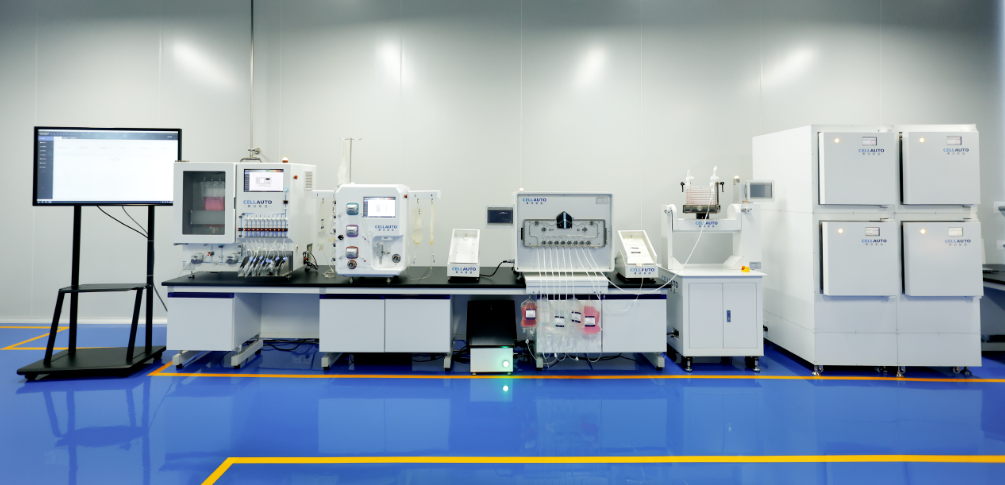
For Lecheng’s cell companies and hospitals, CellAuto provides an integrated solution — a fully-closed industrial-automation cell-preparation line plus full-lifecycle digital quality control — focused on four problems: being able to produce, deploying fast, passing inspection, and being auditable.
1. Able to produce: suspension and adherent processes in one line
The line covers the full flow of seed recovery, culture, digestion, washing, expansion, concentration, formulation and dispensing, and supports modular configuration for suspension cells such as CAR-T and NK and adherent cells such as MSC and iPS. For the mesenchymal stem cells, immune cells and tissue-engineering precursors common in Lecheng, process packages can be transplanted by indication and batch size, without rebuilding an entire facility for a single project.
2. Fast deployment: modular, low cleanroom dependence
Using a fully-automated manufacturing-platform approach, flexible modules can be deployed in tiers at hospitals, regional CDMOs and park laboratories; partly-automated closed lines can support key preparation in a Grade D environment, reducing the reliance of traditional manual lines on high-grade cleanrooms and large numbers of skilled staff. For projects that must “start localised preparation within six months of approval”, a compact path of site assessment → module selection → process transfer → validation → trial production avoids lengthy construction and repeated rebuilds.
3. Passing inspection: GMP requirements embedded in the line
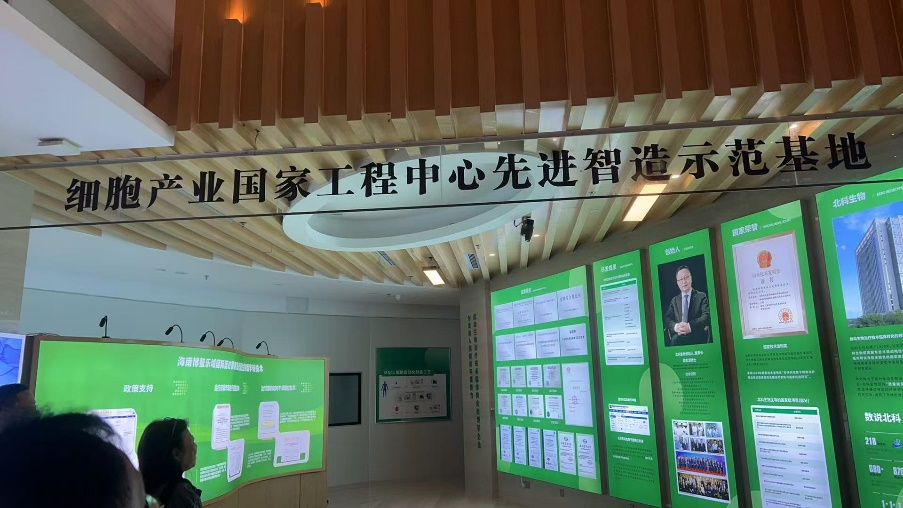
Lecheng’s translational-application rules require preparation laboratories to meet GMP basic principles, with developed and validated processes and a designated Qualified Person, covering procurement, acceptance, storage, preparation and release. CellAuto’s solution reduces manual intervention through fully-closed automation, with Grade A environment maintenance, contamination control, dynamic material management and tamper-proof data storage. Qionghai Beike, running CellAuto’s system, has passed Lecheng’s preparation compliance inspection and is among the first certified laboratories — a reference for localisation in Lecheng.
4. Traceable: the system gives regulators the data they ask for
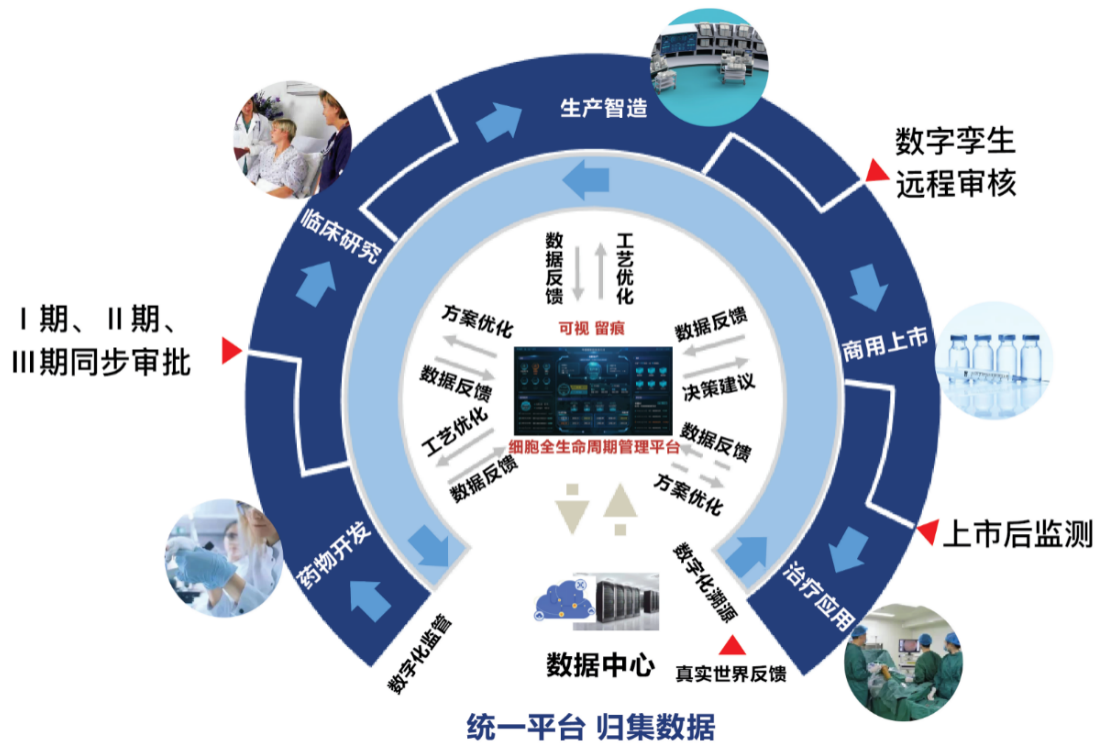
Built on digital twins and AI recognition, the full-lifecycle platform performs cell-state assessment, non-invasive testing, bidirectional traceability and remote auditing; it creates electronic records from donor-material receipt through preparation, testing and release to clinical infusion, and can export adverse-event, batch and follow-up data as required, integrating with Lecheng’s regulatory services and hospital QC systems. This directly answers the new rules’ red line that “missing data means suspension”.
III. An implementation path for cell companies and hospitals
1. Already approved, near the six-month mark: first run a localisation gap assessment, then choose the suspension or adherent process module, bring in the CellAuto line, configure process validation and batch records, pass the compliance inspection and start the first batch.
2. Preparing to apply for translational application: design in-house or Lecheng CDMO preparation capability in step with the application, writing the process parameters, quality attributes and traceability fields in full the first time, to avoid the “approve first, add the line later” trap that leads to time-limited rectification.
3. Multiple projects, multiple institutions: use a regional flexible line plus a unified digital platform, running multiple process packages on one set of hardware so several institutions can share preparation and audit data, reducing the cost of each hospital building its own line.
4. Handling suspension and resumption: the line has built-in deviation capture, electronic traceability and rectification trails, so in the event of an adverse event or inspection it can quickly locate the batch, lock the samples and generate resumption evidence, shortening the review cycle.

IV. Why this matters for Lecheng
Lecheng’s goal of “orderly development” is, at its core, about turning approved technology into deliverable, regulatable and reviewable clinical capability. CellAuto provides not just hardware but manufacturing infrastructure — “line + process package + digital QC + compliance support”: companies take fewer wrong turns in process transfer, hospitals build fewer heavy-asset laboratories, and regulators receive continuous, real, auditable data, lowering the overall risk of “approved but not implemented, implemented but not compliant”.
In Lecheng, CellAuto has already supported Type-2 diabetes and lupus stem-cell clinical applications and Qionghai Beike’s compliance inspection. For the new “start localised preparation within six months” requirement, the earlier automation and digital QC are built into the application, the less passive rectification follows.
Partners who need a “Lecheng localised preparation” plan designed around their cell type (MSC / CAR-T / NK / TIL), estimated annual batch volume and hospital site conditions are welcome to contact CellAuto’s solution team.