
Custom process
One line,three very different buildings.
A hospital translating its own research, a CDMO running other people's processes and a pharmaceutical workshop in commercial production all need the same compliance and very different layouts. The CellAuto line is modular so that the same equipment answers all three.
Tell us your facility →See the systems
Application scenarios
Where these linesare actually installed.
Each of the three is a real deployment pattern, not a brochure category. The difference between them is the layout, the batch model and the scheduling, not the compliance standard, which stays the same throughout.
Tertiary hospitals
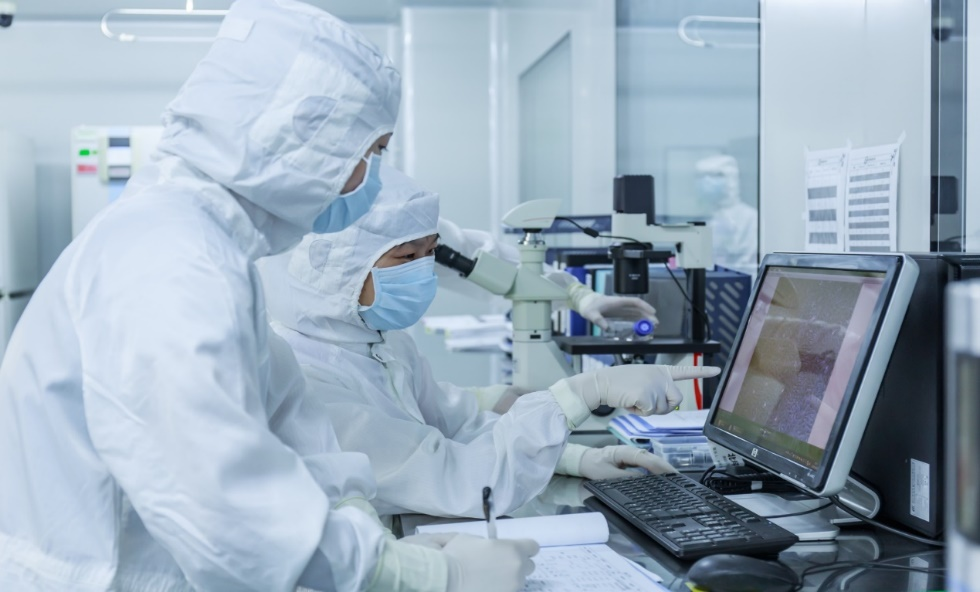
Deployable in a Grade D environment, with a modular line designed for facilities that are short of space. It supports personalised one operator, one batch manufacturing, and scales to multi-patient production when the programme grows.
CDMO manufacturing platform
Deployable in Grade D, with rapid deployment and flexible expansion. Flexible manufacturing handles complex processes that do not fit a fixed line, and intelligent scheduling resolves the production planning bottlenecks a CDMO lives with.
Pharmaceutical workshops
Deployable in Grade D, with hardware that expands to support stable mass production. Software traceability closes the compliance loop across the whole process, and the integrated solution supports credible remote auditing.
In all three the requirement stays a Grade D cleanroom rather than the Class B background an open process demands, because the preparation never opens to the room.
Technical advantages
Low capital investment
Preparation runs in a Grade D cleanroom, which cuts both the construction cost of the facility and what it costs to run afterwards.
Modular design
Rapid deployment and flexible scaling across different applications, supporting customised single-batch production by one operator as well as stable large-scale manufacturing.
Advanced performance
A fully integrated, industry-leading closed tubing system carries the product from one stage to the next without an open step.
Exceptional stability
Predefined process parameters deliver consistent product quality and batch-to-batch reproducibility, rather than depending on who is on shift.
Intelligent automation
Highly automated workflows with comprehensive software traceability, giving a compliant closed loop over the whole manufacturing process.
High flexibility
Compatible with a wide range of processes and production scales, which is what removes the scheduling bottleneck rather than simply moving it.
A worked configuration
What ten thousand vials a yearactually looks like.
One real sizing, for a customer who asked for ten thousand vials a year. Yours will differ, but this is the shape of the answer: a count of each system, the power and floor space it needs, and a culture time of seven to nine days per batch.
Worked from 6.60 × 10⁷ cells per vial, a new batch started every two days and thirty-six culture matrices. At five hundred million cells per ten-layer factory the line reaches roughly 10,400 vials a year, and at seven hundred million it reaches 14,600.
The systems theline is built from.
Send us your floor planand your cell type.
The configuration is worked out against your process, your batch size and the room you actually have. Tell us those three things and we will come back with the line.