
X Lab Series · Laboratory automation
A benchthat runs the whole protocol.
Sample preparation, the experiment itself, data acquisition and analysis are four jobs that normally need a person present for all of them. The workstation runs the sequence unattended, with robotic arms, temperature control, instruments and one control system.
Request a datasheet →See the X Lab Series
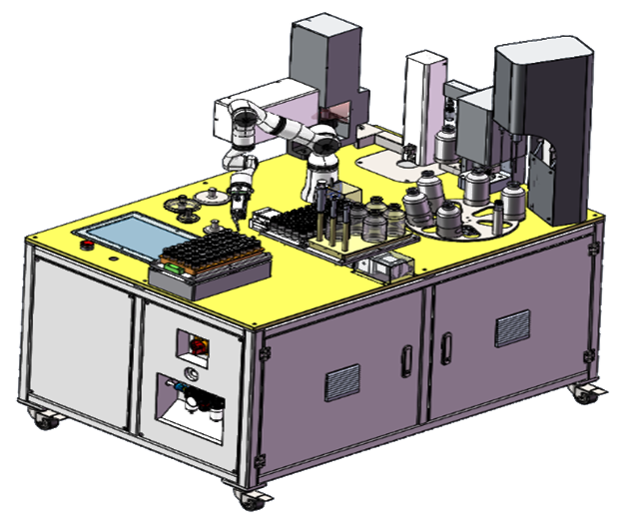
Key features
Flexible modular configuration
Functional units are configured to the experiment rather than the other way round, which is what makes one platform workable across different life science applications.
Intelligent liquid handling
High-precision automated sample loading and pipetting, which improves throughput and removes the pipetting error that is hardest to detect afterwards.
Contamination-resistant design
Selected models carry integrated air purification, which matters for sensitive work such as nucleic acid extraction and molecular biology.
End-to-end workflow automation
Complex protocols, including organoid culture, run start to finish without intervention, which reduces workload and makes results reproducible.
How it works
Four jobs,one unattended run.
The value of automating a laboratory bench is not that it is faster. It is that the same protocol produces the same result when a different person is on shift, because no person is involved in the steps that vary.
Prepare
Samples are loaded and pipetted automatically, to a precision a hand cannot repeat across a long run.
Execute
Robotic arms, temperature control modules and the analytical instruments run the protocol under one intelligent control system.
Acquire and analyse
Data is captured and analysed as part of the same run, so the result and the record arrive together.
The workstation suits complex protocols that run long, organoid culture among them, where the cost of a single inconsistent step is an entire experiment.
Specification
Module selection depends on the protocols you run. Final configuration is agreed during project planning.
The rest of theX Lab Series.
Tell us the protocolsyou actually run.
The modules are selected against the work in front of you. Describe the protocols and the throughput you need, and we will come back with the configuration.